











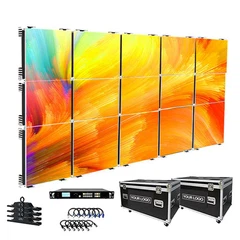

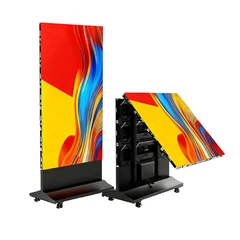


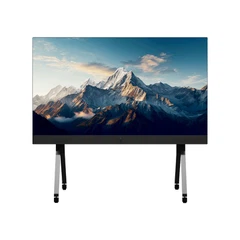
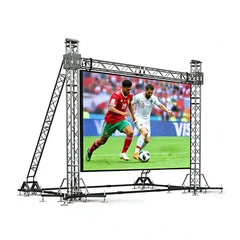
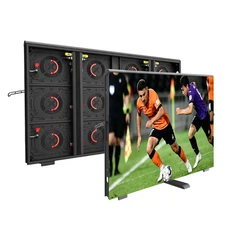
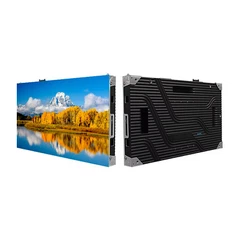




The color and luminous efficiency of LEDs are related to the materials and processes used in their manufacture. Red, green, and blue are the most widely used. Because LED displays operate at low voltage (only 5V), can actively emit light with a certain brightness that can be adjusted by voltage (or current), and are impact-resistant, vibration-resistant, and have a long lifespan (100,000 hours), no other display method can rival LED displays in large-scale display equipment.
A display screen that combines red and green LEDs as a single pixel is called a dual-color screen or full-color screen; a display screen that combines red, green, and blue LEDs as a single pixel is called a tri-color screen or full-color screen. Indoor LED screens typically have a pixel size of 2-20 mm, often using several LED chips that produce different primary colors packaged together. Outdoor LED screens typically have a pixel size of 8-32 mm, with each pixel composed of several individual monochrome LEDs. Common finished products are called pixel tubes; dual-color pixel tubes generally consist of 2 red and 1 green LEDs, while tri-color pixel tubes consist of 1 red, 1 green, and 1 blue LED.
Whether using LEDs to create monochrome, dual-color, or tri-color screens, the brightness of each LED constituting a pixel must be adjustable to display an image. The fineness of this adjustment is called the grayscale level of the display screen. The higher the grayscale level, the more delicate the displayed image, the richer the colors, and the more complex the corresponding display control system. Generally, a 256-level grayscale image has very smooth color transitions, while a 16-level grayscale color image has very obvious color transition boundaries. Therefore, current color LED screens are required to have 256 to 4096 grayscale levels.
The LED luminescent materials used in displays come in the following forms:
LED lamps (or single lamps): Generally composed of a single LED chip, a reflector, a metal anode, and a metal cathode, encased in an epoxy resin shell with light-gathering capabilities. One or more (different colors) single lamps can constitute a basic pixel. Due to their high brightness, they are mostly used in outdoor displays.
LED dot matrix modules: Composed of several chips forming a luminescent matrix, encapsulated in an epoxy resin shell within a plastic shell. Suitable for row and column scanning drives, easily forming high-density displays, and mostly used in indoor displays.
Surface mount LEDs (or SMD LEDs) are LEDs in a surface mount package, suitable for indoor full-color displays, allowing for single-point maintenance and effectively overcoming mosaic effects.


