
























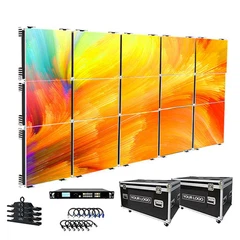

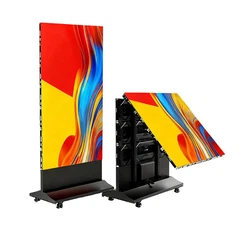




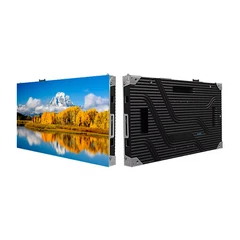









Fifty years ago, people already understood the basic knowledge that semiconductor materials could produce light, and the first commercially available diode was produced in 1960. LED is an abbreviation for Light Emitting Diode. Its basic structure consists of an electroluminescent semiconductor material placed on a lead frame, then sealed with epoxy resin to protect the internal core wires, giving LEDs good shock resistance.
The core of a light-emitting diode is a chip composed of p-type and n-type semiconductors. Between the p-type and n-type semiconductors is a transition layer called a p-n junction. In the PN junction of certain semiconductor materials, when injected minority carriers recombine with majority carriers, the excess energy is released in the form of light, thus directly converting electrical energy into light energy. When a reverse voltage is applied to the PN junction, minority carriers are difficult to inject, so no light is emitted.

This type of diode, made using the principle of injection electroluminescence, is called a light-emitting diode, commonly known as an LED. When it is in the forward operating state (i.e., a forward voltage is applied across its terminals), as current flows from the LED anode to the cathode, the semiconductor crystal emits light of different colors from ultraviolet to infrared, and the intensity of the light is related to the current.