








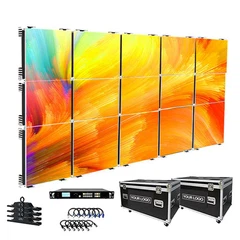

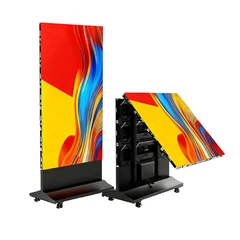


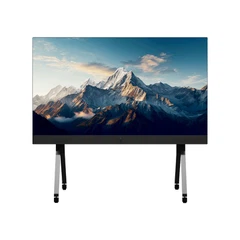
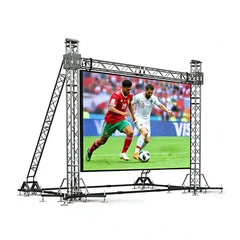
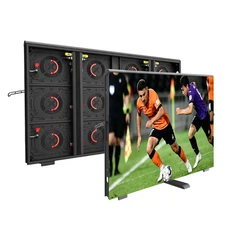
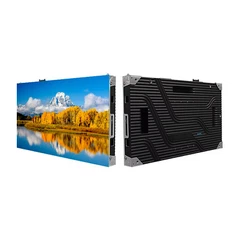



In the world of visual technology, LED video walls have emerged as a revolutionary medium for delivering high - impact, dynamic content. As a leading supplier of Video Wall LED, LED Video Wall, and LED Video Wall Panels, I am often asked about various technical aspects of these amazing displays. One such crucial aspect is the grayscale of an LED video wall.
What is Grayscale?
Grayscale refers to the range of shades between pure black and pure white that an LED video wall can display. In essence, it represents the ability of the display to show different levels of brightness, which is fundamental for creating realistic and detailed images. A higher grayscale means more distinct brightness levels can be represented, resulting in a smoother and more accurate reproduction of colors and tones.
Imagine a photograph of a sunset. The sky transitions from the deep blues of the horizon to the warm oranges and reds near the sun. A video wall with a limited grayscale might struggle to accurately represent these subtle color and brightness changes. The sky could appear as a series of blocky, distinct colors rather than a smooth gradient. On the other hand, a video wall with a high grayscale can capture and display each nuanced shade, making the image look more lifelike.
Importance of Grayscale in LED Video Walls
Realistic Image Representation
As mentioned earlier, a high grayscale is essential for creating realistic images. In applications such as advertising, where the goal is to attract and engage viewers, the ability to display accurate colors and smooth gradients can make a significant difference. For example, a car advertisement on an LED video wall with low grayscale might show the vehicle's paintwork looking flat and unappealing. In contrast, a video wall with high grayscale can bring out the shine and depth of the paint, making the car look more attractive and desirable.
Enhanced Visual Experience
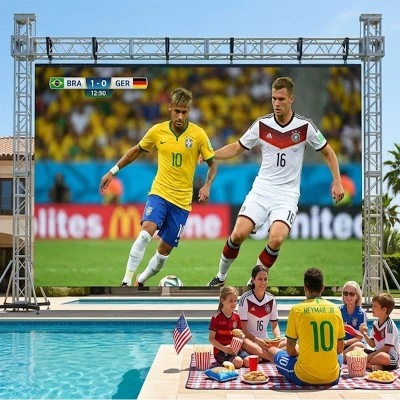
In entertainment venues like theaters, concert halls, and sports arenas, the grayscale of an LED video wall can greatly enhance the overall visual experience. In a movie screening, a high - grayscale video wall can accurately reproduce the dark shadows in a suspenseful scene and the bright highlights in a sunny landscape. This allows the audience to fully immerse themselves in the story, as the visuals are more true to life.


Data Visualization
In business and educational settings, LED video walls are often used for data visualization. Whether it's displaying stock market trends, scientific research data, or educational graphs, a high grayscale is necessary to clearly distinguish between different data points. For instance, in a heat map showing population density across a city, a video wall with low grayscale might make it difficult to tell the difference between areas of high and medium density. A high - grayscale display, on the other hand, can clearly show the variations, making the data more understandable.
Factors Affecting Grayscale
LED Chip Quality
The quality of the LED chips used in the video wall is one of the most significant factors affecting grayscale. High - quality LED chips can offer a wider range of brightness levels, allowing for a higher grayscale. These chips are designed to have better control over the amount of light they emit, which is crucial for accurately representing different shades.
Control System
The control system of the LED video wall also plays a vital role in determining the grayscale. A sophisticated control system can precisely adjust the brightness of each LED pixel, enabling the display to achieve a high grayscale. It can process and transmit data quickly, ensuring that the colors and brightness levels are accurately reproduced on the screen.
Driving Circuitry
The driving circuitry is responsible for providing the necessary electrical power to the LED chips. A well - designed driving circuitry can ensure that the LEDs receive a stable and accurate voltage, which is essential for maintaining a consistent grayscale. If the driving circuitry is of poor quality, it can cause fluctuations in the brightness of the LEDs, resulting in a lower grayscale.
Measuring Grayscale
Grayscale is typically measured in bits. A video wall with an 8 - bit grayscale can display 256 levels of brightness (2^8 = 256), while a 10 - bit grayscale can display 1024 levels (2^10 = 1024), and a 12 - bit grayscale can display 4096 levels (2^12 = 4096). As the number of bits increases, the grayscale range expands, allowing for more detailed and accurate color representation.
It's important to note that the human eye can generally perceive a limited number of brightness levels in a given scene. However, in high - contrast environments or when viewing large - scale displays, a higher grayscale can still make a noticeable difference. For example, on a large LED video wall in a brightly lit shopping mall, a higher grayscale can help the images stand out and look more vibrant.
How Our LED Video Walls Excel in Grayscale
As a supplier of Video Wall LED, LED Video Wall, and LED Video Wall Panels, we take great pride in the grayscale performance of our products. We use only the highest - quality LED chips that are specifically selected for their excellent brightness control and wide grayscale range.
Our control systems are state - of the - art, designed to process and transmit data with high precision. They can accurately adjust the brightness of each pixel in real - time, ensuring that the grayscale is maintained even when displaying fast - moving or high - contrast content.
In addition, our driving circuitry is carefully engineered to provide a stable and consistent power supply to the LEDs. This helps to prevent any fluctuations in brightness, resulting in a smooth and uniform grayscale across the entire video wall.
Conclusion
The grayscale of an LED video wall is a critical factor that can significantly impact the quality of the displayed content. Whether it's for advertising, entertainment, or data visualization, a high - grayscale video wall can provide a more realistic, engaging, and informative visual experience.
As a trusted supplier of Video Wall LED, LED Video Wall, and LED Video Wall Panels, we are committed to providing our customers with products that offer exceptional grayscale performance. If you are in the market for an LED video wall and want to ensure the best possible visual experience, we invite you to contact us for a detailed discussion about your requirements and how our products can meet them.
References
- "LED Display Technology Handbook", published by a leading industry research institute.
- Various research papers on LED video wall performance and grayscale optimization from academic journals.


