









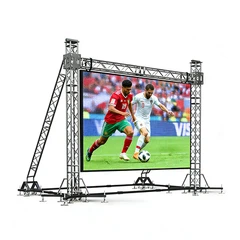
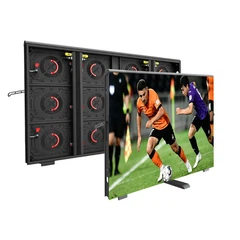
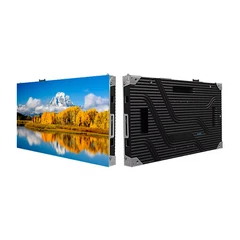
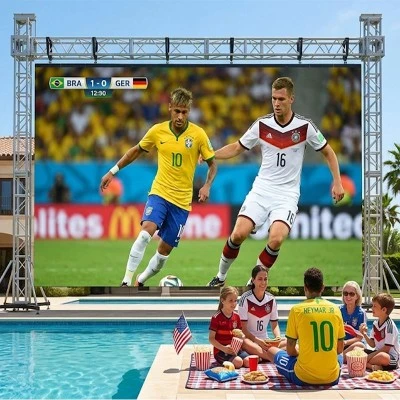


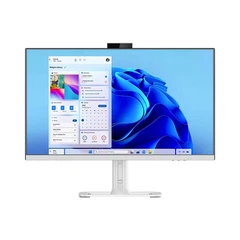
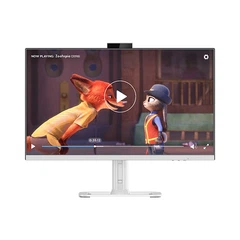
LED displays are classified in various ways, but can be broadly categorized as follows:
Based on usage environment: Indoor, Outdoor, and Semi-outdoor.
Indoor screens typically range from less than 1 square meter to over ten square meters, with a high dot density. They are used in environments without direct sunlight or artificial lighting, at viewing distances of several meters or more. The screen is not waterproof.
Outdoor screens typically range from a few square meters to tens or even hundreds of square meters, with a lower dot density (usually 1000-4000 dots per square meter). The brightness is 3000-6000 cd/square meter (brightness requirements vary depending on orientation). They can be used in direct sunlight, at viewing distances of tens of meters or more. The screen has good wind, rain, and lightning protection capabilities.
Semi-outdoor screens fall between indoor and outdoor screens. They have high brightness and can be used outdoors without direct sunlight. The screen has some degree of sealing and is typically used under eaves or inside shop windows.
LED displays can be categorized by color into monochrome, dual-color, and tri-color (full-color) displays. Monochrome displays use only one color of light-emitting material, most commonly red, though yellow-green can be used in special cases (e.g., funeral homes). Dual-color displays are generally composed of red and yellow-green light-emitting materials. Tri-color displays are further divided into full-color displays (composed of red, yellow-green (wavelength 570nm), and blue) and true-color displays (composed of red, pure green (wavelength 525nm), and blue).
Also, they can be categorized by control or usage method into synchronous and asynchronous displays. Synchronous displays operate essentially like computer monitors, updating at least 30 frames per second to mirror the computer image point-to-point. They typically offer multi-grayscale color display capabilities, enabling multimedia advertising effects.
Asynchronous mode refers to LED screens having the ability to store and automatically play content. Text and non-grayscale images edited on a PC are transmitted to the LED screen via serial port or other network interface, and then the LED screen automatically plays the content offline. It generally does not have multi-grayscale display capability and is mainly used for displaying text information. Multiple screens can be networked.
Classification by Pixel Density or Pixel Diameter
Because the specifications of LED dot matrix modules used in indoor screens are relatively uniform, they are usually classified according to the pixel diameter of the module, mainly as follows: ∮ 3.0mm 60000 pixels/m² ∮ 3.75mm 44000 pixels/m² ∮ 5.0mm 17000 pixels/m² Outdoor screens do not have a very uniform standard for pixel diameter and pixel spacing. Based on the number of pixels per square meter, there are various specifications such as 1024 dots, 1600 dots, 2000 dots, 2500 dots, and 4096 dots.
Based on display performance, LED displays can be categorized as follows:
Video Displays: Generally full-color displays.
Text Displays: Generally single-color displays.
Graphic Displays: Generally dual-color displays.
Market Data Displays: Generally digital tubes or single-color displays.
Based on display devices, LED displays can be categorized as follows:
LED Digital Displays: Display devices are 7-segment LEDs, suitable for clock displays, interest rate displays, etc., displaying numbers.
LED Dot-Matrix Graphic Displays: Display devices are dot-matrix display modules composed of many evenly arranged light-emitting diodes, suitable for displaying text and image information.
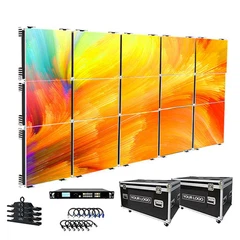
LED Video Displays: Display devices are composed of many light-emitting diodes, capable of displaying various video files, including videos and animations.


